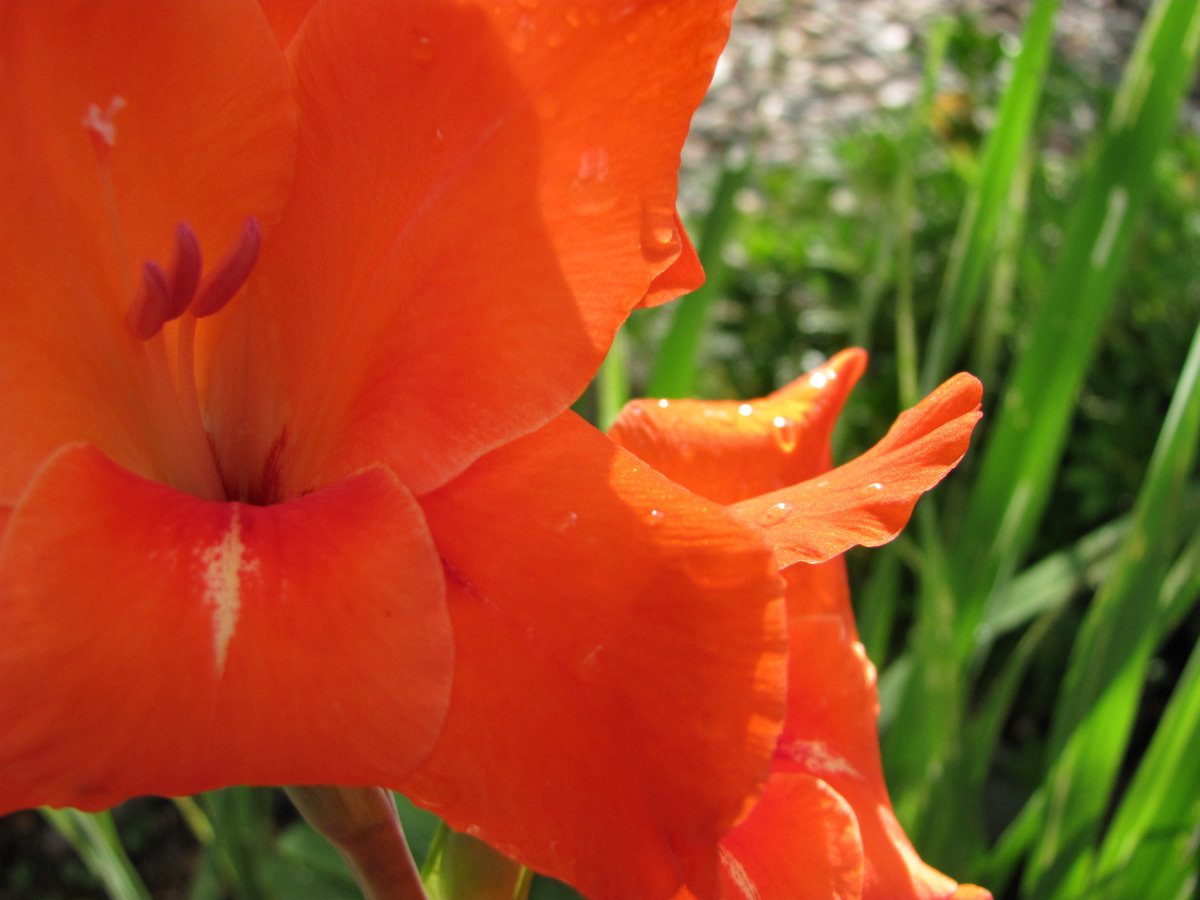
This is, so far, the best flower on my patch of Gladiolus 'Velvet Eye' in my Front House Garden. In that garden there are two variety of Gladiolus but only the 'Velvet Eye' is open. The other, 'Hunting Song', so far has nice looking bud stalks that I hope to preserve now that I know there is a problem. This is my first year with Gladiolus and my first year with thrips. When I was researching the problem, I found there were surprisingly few images of the damage, which meant a lot of reading to identify the problem. I have been working on it all day. So I decided to
share my photographs of my thrip infested 'Velvet Eye' in a set on flickr and share my experience with these little garden pests here.
It all started when I noticed the glads in the front house garden seemed to have rusty looking red streaks along the edges of the stalks which spread through the whole stalk within a week or so. The bud stalks looked good when they first appeared and we have had an abnormally wet year here which does encourage mould, mildew and fungal type problems in the garden so I didn't think too much about it. Although I have never grown glads before, I could tell there was a big difference in my glads in that front garden versus my glads in the sun gardens. Then, before the buds even started to open, I could see that they were drying out and turning brown on the edges. I started watching them closer and more often but all I saw was papery dryed out buds opening to papery dried out flowers. Very disappointing. Last night we had a storm that lasted through until morning so after deadheading in the garden, I got on the computer and started looking for my glad problem. I first searched for rust on glads but quickly found out that gladiolus rust is yellow. Moving on, I searched for dry buds before opening and found thrips. I read everything from articles at University websites to garden advice columns and UK Greenhouse organic pest control solutions. I found out that thrips are either the worst spreading problem that is impossible to control or they are innocuous and can be ignored as healthy plants will recover from them and a spray hose will get rid of them. Yikes! What a lot to wade through. Drawing from the answers that appeared most commonly or from what I would consider the most reputable sources, what I have decided in the end is that me and my glads will survive the thrips. Here are a few interesting tidbits I discovered in my reading:
thrips are only a problem if you want pretty flowers (which I do)
I can treat the corms before winter storing a couple of different organic ways (one of which I will try but not recommend here until I find it successful) which will eliminate the problem in the corms
thrips cannot survive in the soil over Northern winters so that will eliminate the problem in my garden
thrips prefer purple or dark pink gladiolus flowers
thrips are very, very tiny so that is why I could not see them until I knew where and how to look
To find the adult thrips, peel back the leaf sheath along the edge of a new bud stalk. You will see little black and brown specs that move. Get rid of them all along the sheath if you want pretty flowers. As far as I can tell though, you will see thrip damage long before you find thrips and thrips seem to be the only cause of a dried out flower bud that will not open other than lack of water. We have not had a lack of water problem.
To save the 'Hunting Song' beside these 'Velvet Eye', I am going to spray the thrips out of the bud sheaths morning and evening. I am not going to worry about the non-blooming stalks. The thrips can have them this year. I am not entirely certain glads are worth the effort but I kill enough plants accidentally without tossing those that can be saved. So I will try to save them but if they do not give me a spectacular display next year, Linda may have to find a new space for a whole bunch more glads. I want pretty flowers but I am only willing to work so hard for them.